


Blog
Get in Contact with Us Today!
Fill out the form below or call
(970) 592-8298
to get started.
Get in Contact with Us Today!
We will get back to you as soon as possible.
Please try again later.
Our Services
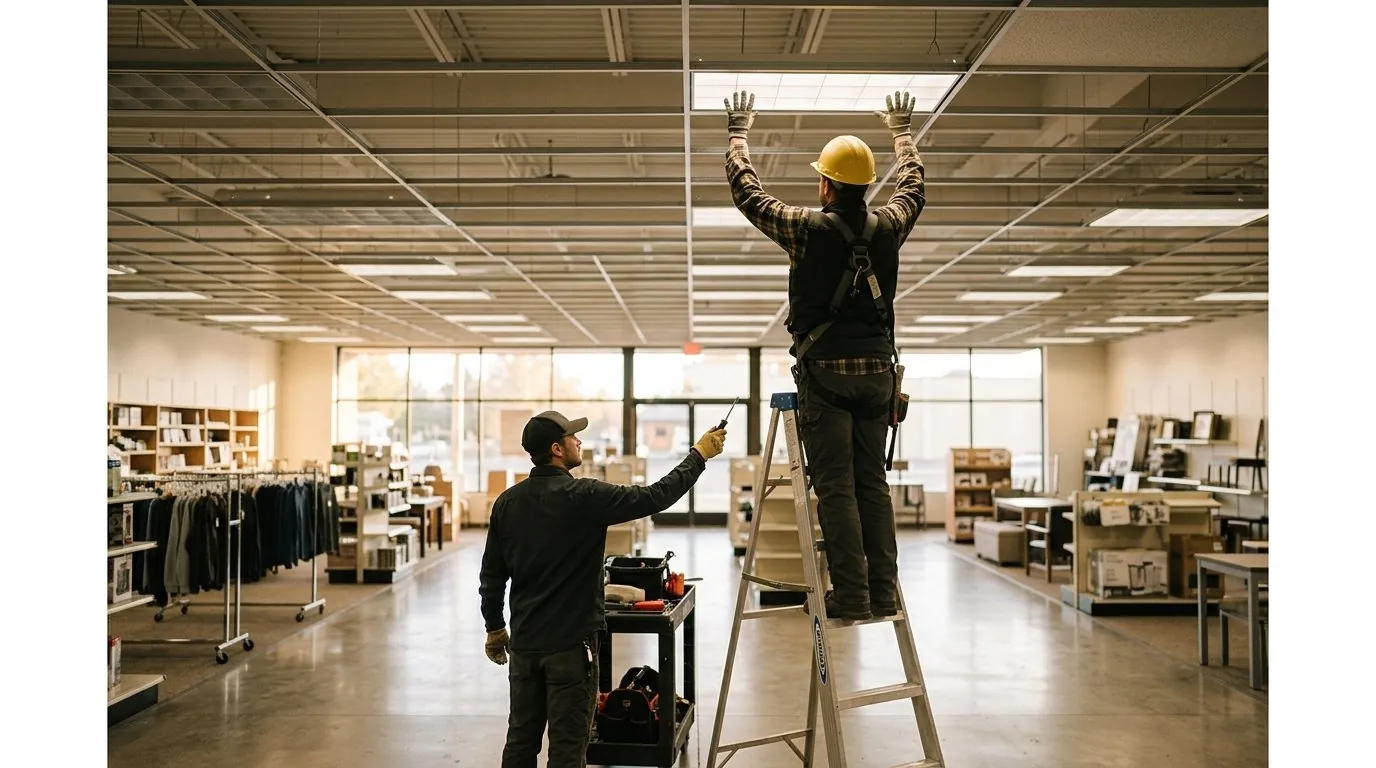
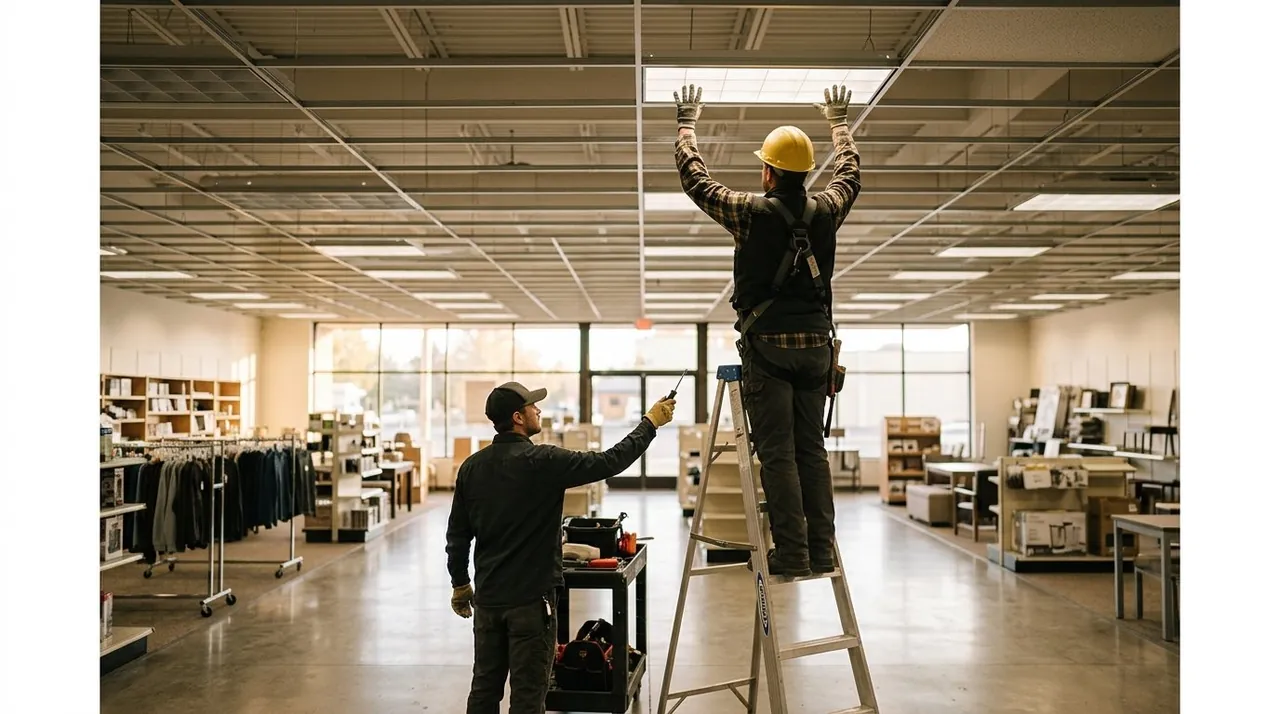
A commercial LED lighting retrofit swaps outdated fluorescent or HID fixtures for efficient LED systems, often cutting lighting energy costs by 50% to 70%. For business owners across Grand Junction and the Western Slope, that difference shows up directly on the monthly utility bill. As commercial electric rates continue to climb, the math on upgrading old lighting has never made more sense.
October brings shorter days to Grand Junction, Fruita, and Palisade, which means storefronts, warehouses, and offices are running their lights longer each week. That added usage exposes just how much older lighting systems waste. Legacy fluorescent and HID fixtures can lose up to 30% of their energy output as heat instead of usable light.
Why Outdated Lighting Is Costing You More Than You Think
Older lighting systems were never designed with today's energy rates in mind. Every hour a fluorescent tube stays lit, a chunk of that electricity is simply lost as wasted heat.
For a retail shop in Redlands or a warehouse in Clifton, that waste adds up fast across dozens of fixtures. Beyond the electric bill, aging ballasts and tubes also mean more frequent maintenance calls and flickering replacements.
There's also a regulatory angle worth knowing about. State energy rules are increasingly targeting carbon emissions in larger commercial buildings, and outdated lighting is becoming an operational liability rather than just an inconvenience.
The Shift Toward Smart, Rebate-Friendly Retrofits
Commercial lighting rebates used to be simple: swap a bulb, get a rebate. That structure is changing quickly.
Nearly half of commercial lighting rebate programs have moved away from "per bulb" payouts. Instead, they now reward total energy reduction and the integration of smart sensors and controls.
This shift matters because a retrofit designed only around individual bulb replacement may leave rebate money on the table. A properly engineered project, one that accounts for overall wattage reduction and occupancy sensing, captures more value from utility incentive programs.
What a Commercial LED Lighting Retrofit Actually Involves
A quality retrofit is more than swapping bulbs one for one.
It typically includes the following steps:
- Energy audit: An electrician evaluates current fixture types, wattage, and usage patterns throughout the building.
- System design: LED fixtures and smart controls are selected to match the space, from open retail floors to warehouse racking.
- Rebate coordination: Paperwork and specifications are aligned with current utility rebate structures to maximize the payback.
- Installation: Fixtures are replaced with minimal disruption to daily business operations.
- Commissioning: Sensors, dimming, and controls are tested and calibrated for real-world use.
Skipping the design and commissioning steps is where many retrofits fall short. A business that just replaces bulbs without addressing controls often misses out on both energy savings and rebate eligibility.
Local Considerations for Western Slope Businesses
Commercial buildings across Delta, Orchard Mesa, and Moab often have unique layouts, from high warehouse ceilings to older downtown storefronts. Each of these settings calls for a slightly different lighting design approach.
High-bay warehouse spaces, for example, benefit from LED fixtures paired with motion sensors that cut usage during slow periods. Retail storefronts often see the biggest visual improvement, since LED lighting renders colors more accurately than aging fluorescent tubes.
Business owners planning a commercial LED lighting retrofit should also think ahead about future load needs. If additional electrification projects, like EV fleet charging or updated HVAC systems, are on the horizon, it helps to plan the electrical work together.
Choosing an Electrical Partner for the Job
Not every retrofit is created equal, and the installer matters as much as the fixtures. Customers of Integrative Electric frequently mention how clearly the crew explains each step of a project before work begins.
That kind of communication matters most on commercial jobs, where downtime and scheduling directly affect revenue. A retrofit planned around your business hours, rather than around the electrician's convenience, keeps operations running smoothly throughout the project.
Frequently Asked Questions
How long does a commercial LED retrofit take to pay for itself?
Payback periods vary by building size and fixture count, but many businesses see a faster return when rebates are factored into the total project cost. Combining energy savings with available incentives shortens the timeline considerably.
Do I need to close my business during the retrofit?
Most retrofits are scheduled around normal operating hours or completed after hours to minimize disruption. An experienced electrician can phase the work so only small sections of the building are affected at a time.
Can smart lighting controls really increase my rebate amount?
Yes. Because rebate programs increasingly reward total energy reduction and smart sensor integration, adding occupancy or daylight sensors can boost the rebate value beyond a simple bulb swap.
Is a lighting retrofit worth it for a small storefront?
Even small commercial spaces benefit from reduced energy costs, less frequent maintenance, and better lighting quality for customers. The reduced heat output from LEDs can also ease strain on cooling systems during warmer months.
If your business in Grand Junction or the surrounding Western Slope is ready to cut lighting costs and modernize your space, reach out to our team to schedule a lighting evaluation.
Don’t delay.
Contact us today!