


Blog
Get in Contact with Us Today!
Fill out the form below or call
(970) 592-8298
to get started.
Get in Contact with Us Today!
We will get back to you as soon as possible.
Please try again later.
Our Services
Choosing Integrative Electric for Generator Services in Grand Junction, CO
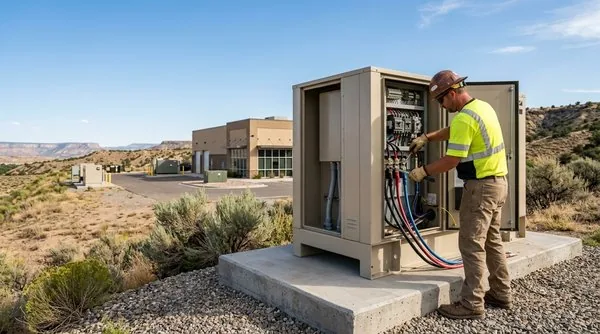
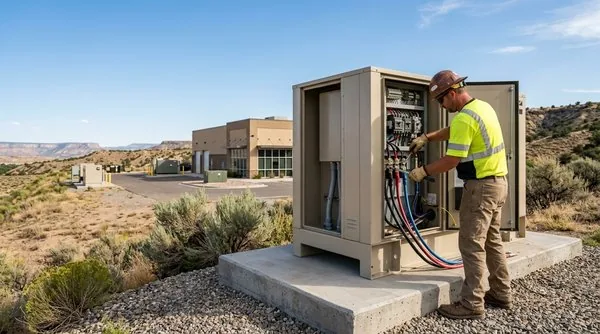
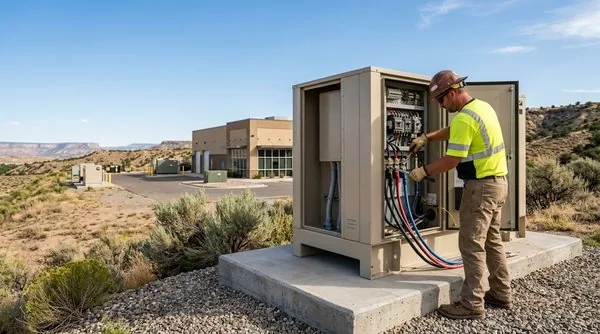
Power outages are no longer a rare inconvenience for businesses on the Western Slope. They are a growing operational risk. With grid strain increasing across the region in 2026, commercial generator installation has become one of the most critical investments a Grand Junction area business can make.
Integrative Electric works with commercial and industrial property owners throughout the region to design and install backup power systems that keep operations running when the grid cannot deliver. Here is what every local business owner needs to understand before making this investment.
Why Grand Junction Businesses Can't Afford to Wait
The Western Slope's electrical grid is under pressure from multiple directions at once. Rapid electrification across Colorado, growing tech industry power demand, and the ongoing transition away from traditional energy sources are all contributing to grid instability. Locally, the Colorado River Basin has seen reduced hydropower generation capacity. On top of that, wildfire mitigation efforts have led to safety shutoffs that cut power to entire service areas with little warning.
The result is simple. Outages are happening more often. They are lasting longer. And for businesses in Grand Junction, Fruita, Clifton, Palisade, and beyond, the cost of downtime is no longer acceptable.
Hotels lose bookings. Restaurants lose inventory. Medical offices face genuine safety crises. Manufacturing and industrial facilities lose production hours that cannot be recovered. A properly installed commercial generator eliminates that vulnerability entirely.
What Makes Commercial Generator Installation Different
Residential generators are a different product category than what commercial facilities require. Scale, fuel systems, automatic transfer switching, and code compliance requirements are all significantly more complex.
Here is what a professional commercial generator installation typically involves:
- Load assessment: A licensed electrician calculates your facility's total power demand, including critical circuits that must stay online during an outage.
- Generator sizing: Units are sized to match your specific load, not just estimated by square footage.
- Automatic Transfer Switch (ATS) installation: The ATS detects an outage and switches your facility to generator power within seconds, often without any manual intervention.
- Fuel system setup: Commercial generators run on natural gas, propane, or diesel. The right choice depends on your facility, local availability, and runtime requirements.
- Code-compliant electrical integration: All wiring, grounding, and connections must meet current National Electrical Code standards and pass local inspection.
- Testing and commissioning: The system is tested under real load conditions before it is considered operational.
Skipping any of these steps creates risk. An undersized unit will fail under load. A transfer switch that is not properly installed can backfeed power into utility lines. That creates an extreme hazard for line workers and your own equipment.
Commercial Generator Installation: Who Needs One in 2026
The businesses reaching out to commercial electricians for generator systems right now share a few common characteristics. They tend to operate continuously, handle perishable inventory, serve vulnerable populations, or depend on powered equipment to generate revenue.
If your business fits any of these descriptions, backup power is not optional:
- Hotels and hospitality properties in the Grand Junction and Moab corridors
- Cold storage and food service operations
- Medical clinics, dental offices, and veterinary practices
- Industrial and manufacturing facilities in the area
- Data centers and server-dependent businesses
- Retail operations with refrigerated merchandise
- Agricultural operations in Delta, Palisade, and surrounding areas
Multifamily residential properties are also rapidly moving toward generator backup systems. This is especially true for larger complexes that cannot leave tenants without power during extended outages.
Pairing Your Generator with a Panel Upgrade
Here is something that surprises many business owners: a generator installation often reveals that the existing electrical panel cannot safely handle the load. Older commercial panels, including legacy systems from brands known for safety failures, were not designed to manage the power cycling that backup generator systems create.
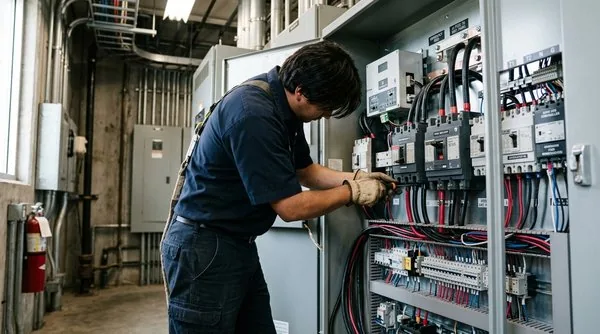
Before completing a commercial generator installation or any major power upgrade, a qualified electrician should inspect your panel. In many cases, the right move is to upgrade to a high-capacity 200-amp or 400-amp panel at the same time. This protects the investment and keeps the project code-compliant. It also prevents nuisance trips or worse once the system goes live.
What to Expect During the Installation Process
A professional commercial generator project is organized, but it does take time. Realistic planning helps avoid surprises.
Here is a general sequence:
- Site consultation and load analysis (typically one visit)
- Permit application with the local building department
- Equipment procurement (lead times vary by generator size and fuel type)
- Site preparation, including concrete pad or mounting system if required
- Electrical rough-in and transfer switch installation
- Generator connection and fuel system hookup
- Inspection and final testing
- Handoff and system orientation for your facilities team
Most commercial installations can be completed within a few days of the equipment arriving on site. The permit and procurement phase is where most of the calendar time is spent.
Frequently Asked Questions
How long can a commercial generator run continuously?
Most commercial-grade generators are designed to run for extended periods, often several days to weeks, depending on fuel supply. Natural gas units connected to a utility line can run indefinitely as long as the gas supply remains active.
Does my business need a permit for a generator installation?
Yes. Commercial generator installations in Grand Junction and across the Western Slope require permits and inspections. A licensed electrician handles this process as part of a professional installation.
How do I know what size generator my business needs?
Sizing is based on a load calculation performed by a licensed electrician. The calculation accounts for all equipment, lighting, HVAC, and any critical systems that must stay powered during an outage. Guessing at size leads to costly problems.
Can a generator power my entire building or just critical circuits?
Both options exist. Whole-building coverage is possible with a large enough unit. Some businesses prefer a managed approach, where the generator powers only critical systems, which allows for a smaller, more cost-effective unit.
What fuel type is best for a commercial generator in this area?
Natural gas is common for facilities already connected to a gas line. Propane works well for rural operations in areas like Delta or Orchard Mesa. Diesel units offer high output and are common in industrial settings. Your electrician will help you evaluate each option based on your location and runtime needs.
Keeping your business online when the grid goes down starts with a single conversation. Reach out to the team at Integrative Electric or call (970) 319-0676 to schedule a site consultation and load assessment for your Grand Junction area facility.
Don’t delay.
Contact us today!